In the bustling Delaware real estate market, every home seller aims to make their listing stand out while ensuring a seamless sale process. If you’re preparing to list your home, you might have come across the term’ pre-listing inspection’. While some might see it as just another box to tick off, in reality, it’s a strategic move that can offer various benefits.

In this guide, we’ll delve deep into why a pre-listing inspection is not only a smart choice but also a potentially lucrative one for Delaware homeowners. Whether you’re a seasoned seller or putting your home on the market for the first time, this insight could make all the difference. Let’s get started.


Understanding the Importance of a Pre-listing Inspection in Delaware

In Delaware’s ever-evolving real estate landscape, being well-prepared and informed is the key to a successful home sale. One of the critical steps that can provide both sellers and buyers with peace of mind is the pre-listing inspection. But what is it, and how does it differ from other types of inspections? Let’s dive in.

What is a Pre-listing Inspection?

A pre-listing inspection is an examination carried out by a certified inspector before a home is listed for sale. Think of it as a thorough health check-up for your home. A pre-listing inspection can give you insights into the condition of your property before showcasing it to potential buyers. Its primary goal is to identify any issues or potential areas of concern that might deter buyers or affect the home’s value.

By addressing these early on, you can enhance the appeal of your property, reduce the risk of surprises during the buyer’s inspection, and potentially even raise the home’s market value.

Now, you might wonder how this differs from the buyer’s home inspection. While both inspections aim to understand the home’s condition, their timing and implications are distinct:

  • Timing: As the name suggests, a pre-listing inspection is done before the home is listed for sale, while a buyer’s inspection takes place after an offer is made but before the sale is finalized.
  • Implications for Sellers: With a pre-listing inspection, sellers get a proactive opportunity to address any issues or make necessary repairs. This can lead to smoother negotiations and a more streamlined sales process. In contrast, issues discovered during a buyer’s inspection can lead to renegotiations, potential price reductions, or even a buyer backing out of the deal.
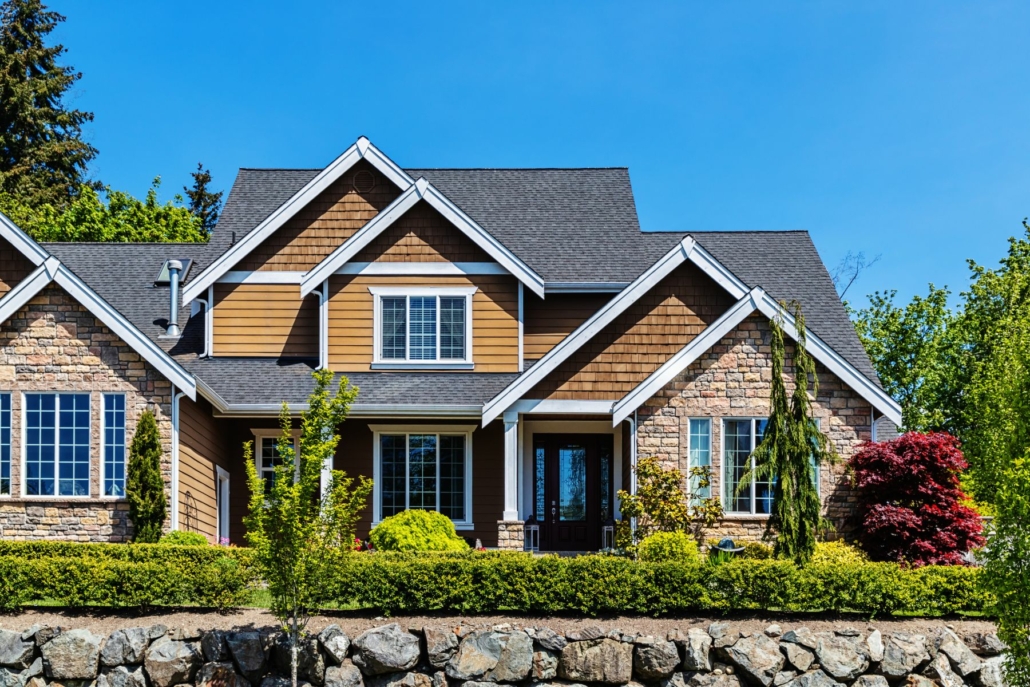
 

Pre-listing inspection

Key Benefits of a Pre-listing Inspection for Delaware Sellers

In Delaware, a pre-listing inspection is a pivotal strategy that’s gaining traction in the real estate market. This is because it brings a host of benefits that can make a significant difference in the home-selling journey. Let’s explore some of the top advantages Delaware sellers can enjoy with a pre-listing inspection.

Gaining a Competitive Advantage

In a market flooded with listings, standing out is paramount. A pre-listing inspection can provide you with a competitive advantage through the following:

  • Making Listings Stand Out: An inspected home is perceived as a well-maintained home. When potential buyers see that a property has undergone a pre-listing inspection, it signals that the seller is transparent and has nothing to hide. This added layer of trust can push your listing to the forefront of a buyer’s choices.
  • Providing Peace of Mind for Buyers: Purchasing a home is a significant investment. Buyers appreciate any measures that reduce uncertainty. Knowing a home has been pre-inspected provides an additional layer of confidence, making them more likely to consider and move forward with the purchase.

Addressing Issues Proactively

A stitch in time saves nine, and this couldn’t be truer in the context of a pre-listing home inspection. It can help address issues proactively through the following:

  • Discovering and Resolving Problems: By identifying issues beforehand, sellers can decide whether to fix them or adjust their listing price accordingly. This preemptive approach prevents last-minute scrambles to address concerns raised during a buyer’s inspection.
  • Reducing Risk of Derailed Deals: Nothing is more frustrating than a deal falling apart at the last moment due to unexpected issues. With a pre-listing inspection, sellers can minimize such surprises, ensuring smoother negotiations and a higher likelihood of the sale going through.

Potentially Increasing Home Value

A well-maintained home is a valuable home, and a pre-listing inspection can guide sellers in optimizing their property’s value through the following:

  • Addressing Minor Issues for Major Gains: Simple fixes, such as repairing leaky faucets or patching up cracks, can drastically improve a home’s appeal. While they might seem inconsequential, these minor repairs can make a big difference in a buyer’s perception, reflecting a well-cared-for property.
  • Doing Common Enhancements: Some frequent findings in pre-listing inspections include inadequate attic insulation, outdated electrical systems, or minor water damage. Addressing these can boost the home’s market value and its functional and aesthetic appeal to potential buyers.
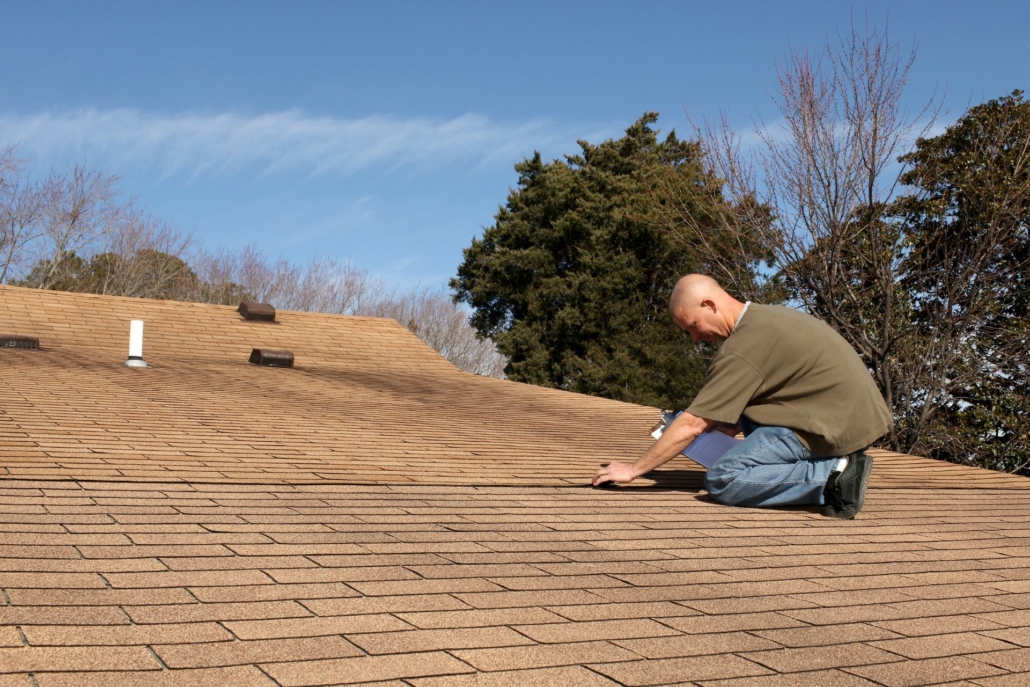
 

roof inspection

Common Misconceptions About Pre-listing Inspections

The choice to invest in a pre-listing inspection is no different. While its benefits are manifold, there are common misconceptions that make some sellers hesitant. Let’s address these myths head-on, dispelling the doubts and highlighting the value a pre-listing inspection can offer.

“It’s Just an Additional Cost”

It’s easy to see a pre-listing inspection as another expense in the long list of costs associated with selling a home. However, when viewed from a broader perspective, the value becomes clear. Here’s why:

  • Potential ROI: The initial investment in a pre-listing inspection can lead to a higher selling price. By addressing issues in advance, sellers can list their homes with confidence, often resulting in a price that’s commensurate with its pristine condition. Furthermore, a smooth sale process without renegotiation pitfalls can lead to quicker closings, saving time and potential holding costs.
  • Saving Money in the Long Run: Discovering issues during a buyer’s inspection can lead to costly, last-minute repairs or price reductions to keep the sale alive. In many cases, the cost of preemptively fixing these issues (informed by a pre-listing inspection) can be significantly less than the financial implications of addressing them during the negotiation phase.

Buyers Will Inspect Anyway, So Why Bother?

While it’s true that many buyers will conduct their inspections, this doesn’t negate the value of a seller-initiated inspection. The reasons are as follows:

  • Benefit of Both Inspections: When sellers conduct pre-listing inspections, they’re often able to address major concerns before the buyer’s inspection, leading to fewer surprises and a smoother transaction. This doesn’t make the buyer’s inspection redundant; instead, it reaffirms the property’s condition, reinforcing buyer confidence.
  • The Value of Transparency: When sellers present a pre-listing inspection report, it sends a powerful message about transparency and integrity. It tells buyers, “I’ve done my due diligence, and here’s what I know about the home.” This level of openness can build trust, making buyers more comfortable with the purchase and potentially even sway their decisions in a competitive market.

 

Home inspector giving advice to the couple

How to Choose the Right Inspector in Delaware

Taking the wise step of opting for a pre-listing inspection is just the beginning. The next crucial phase is selecting the right inspector to ensure a thorough and accurate assessment of your property. With numerous professionals available in Delaware, how can you discern the best fit for your needs? Let’s guide you through the process, offering tips and pointers to help you make an informed decision.

Checking Qualifications and Credentials

The foundation of a trustworthy inspector lies in their qualifications and credentials. Here’s why they matter and what you should look for:

  • Certifications and Training: A reliable home inspector should have undergone formal training and obtained certifications from recognized institutions. Organizations such as the American Society of Home Inspectors (ASHI) or the International Association of Certified Home Inspectors (InterNACHI) set industry standards and provide training to inspectors. Certifications from such bodies can be a strong indicator of an inspector’s competence.
  • Local Delaware Regulations: Different states have various requirements and regulations for home inspectors. In Delaware, ensure that your inspector is compliant with local licensure requirements and adheres to the state’s standards of practice. Familiarity with local building codes and norms is also a significant plus, as it ensures your inspector knows the specifics of homes in the region.

Seeking Recommendations and Reviews

Word of mouth and shared experiences can be powerful tools in your search for the right inspector. Here’s how to make the most of them:

  • Look for Local Delaware Community Feedback: Start by asking friends, family, or neighbors who’ve recently sold homes in Delaware. Their firsthand experiences can provide insights into the inspectors they hired, their thoroughness, professionalism, and overall satisfaction with the service.
  • Check Online Platforms: Websites like Yelp, Angie’s List, and Google Reviews can be valuable resources. Look for inspectors with high ratings and read through reviews to understand the strengths and potential concerns associated with each professional. Remember to focus on recent reviews, as they offer the most up-to-date feedback.
  • Consult Local Real Estate Agents: Experienced real estate agents have likely worked with multiple home inspectors over the years. Their recommendations can be based on consistent performance and feedback from multiple clients, making them a valuable source of referrals.

 

inspector filling up the paper about home inspection

Preparing Your Home for a Pre-listing Inspection

Deciding to have a pre-listing inspection is a proactive step in the home-selling journey. But, just as you’d prepare your home for an open house or a viewing, it’s essential to get it ready for this inspection. A well-prepared home can make the process smoother and more efficient, ensuring that the inspector can easily access all areas and provide a comprehensive report. Here are some practical steps to guide you through this preparation:

Decluttering and Cleaning

A clean and organized home is not just aesthetically pleasing but also facilitates a more efficient inspection. An inspector needs to examine various elements of your home, from electrical outlets to the corners of the basement. A decluttered space ensures they can do so without hindrance. Plus, a tidy home can make a positive impression, suggesting that the property is well-maintained and cared for.

Furthermore, while you might focus on the obvious spots like living rooms or bedrooms, don’t forget to ensure that areas around your furnace, water heater, and electrical panels are clear. Clear out under-sink areas in bathrooms and kitchens, as inspectors will check for possible leaks or plumbing issues. Ensure crawl spaces and storage closets are accessible and reasonably organized, as these are often packed with items over time.

Providing Easy Access

The ease with which an inspector can move around directly impacts the quality of the inspection. Here’s how to ensure unhindered access:

  • Ensure All Areas are Accessible: Move any furniture, boxes, or items that might block access to doorways, windows, or other vital areas of the home.
  • Be Wary of Locked Rooms and Spaces: Ensure that no room is locked. If certain areas, like a home office, are typically locked, leave them open on inspection day or provide a key. This includes external structures like garages or sheds.
  • Check Attics, Basements, and Specialty Rooms: Make sure the entryways to your attic or basement are clear. If you have crawl spaces, ensure they are easily accessible. For homes with unique features, like wine cellars or specialized storage, ensure the inspector can enter without difficulty.


Conclusion: Making an Informed Decision in the Delaware Real Estate Market

In the ever-evolving Delaware real estate landscape, a pre-listing inspection stands out as a strategic tool for home sellers. Beyond merely identifying potential issues, it underscores a commitment to transparency, boosts property value, and offers a competitive edge.

As you journey through the selling process, remember that being proactive and informed not only enhances your experience but also resonates with potential buyers. Embrace the advantages of a pre-listing inspection from providers like Preferred Home Inspections and pave the way for a smoother, more rewarding home sale experience.
Across Delaware, from Wilmington to Newark, homes never simply pass or fail a home inspection. Instead, common home inspection findings in Delaware surface safety concerns, water problems, structural issues, and failing systems that directly affect your purchase price.

With 30 years and 10,000+ local inspections completed, Preferred Home Inspections finds that most reports uncover defects that can be used in repair negotiations. As inspector Cortland Bradley puts it: “Findings are leverage, not deal-killers.” Start with the issues most likely to affect cost and negotiation.

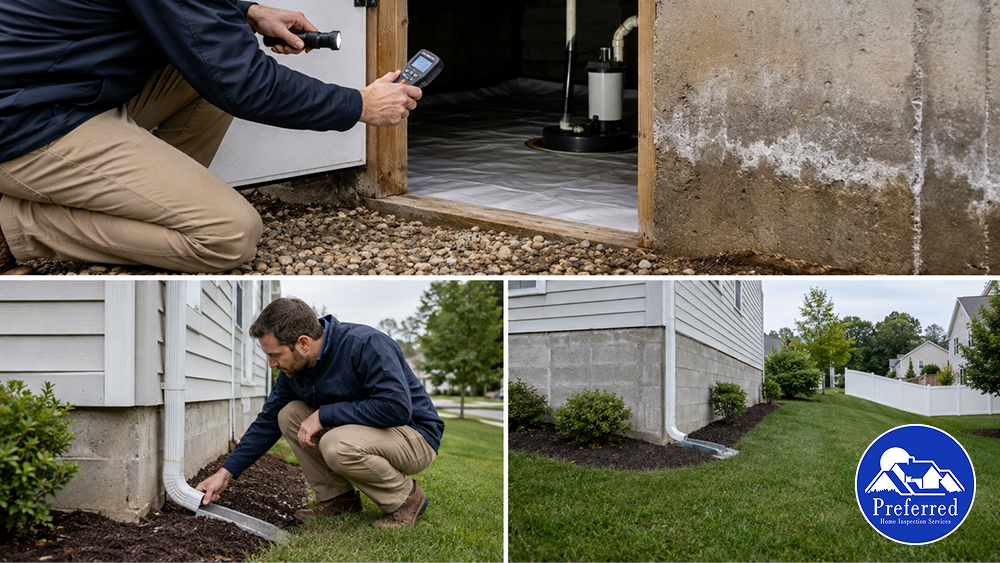
1. Moisture Intrusion and Crawlspace Findings

Nothing derails a Delaware real estate transaction faster than unexpected water in the lower level. Moisture issues commonly turn up during residential home inspections, common moisture issues turn up:

  • Damp crawlspaces and standing water
  • Missing or compromised vapor barriers
  • Failing sump pumps
  • Efflorescence on basement walls

In low-lying pockets across New Castle County and Middletown, heavy clay soil routinely traps surface runoff directly against foundation walls. Unchecked moisture triggers mold growth, wood rot, and structural framing damage. Mortgage lenders and insurance providers routinely flag water intrusion, turning minor drainage flaws into major negotiation friction points before closing.

Fast Next Steps:

  • Check exterior drainage: Make sure downspout extensions discharge water at least six feet from the house and ground slopes away from the foundation.
  • Request documentation: Review how moisture findings are documented with photos in your report. Ask the seller for waterproofing warranties or request a drainage contractor evaluation if active water is present.

Technician inspecting crawl space moisture, drainage, and foundation conditions around a home.

2. Typical Delaware Home Repair Costs and Negotiation Ranges

Use this reference during your inspection contingency period. Actual costs vary by home size, age, and accessibility, so treat these as general planning estimates rather than formal quotes. For any repair estimated over $1,000, secure two to three written estimates from licensed Delaware contractors.

  • GFCI upgrades ($150-$400): Outlet safety conversions. Call a licensed electrician. Seller direct repair.
  • Plumbing leak repair ($200-$600): Pipe or fixture fixes. Call a licensed plumber. Seller direct repair.
  • Water heater replacement ($1,200-$2,500): Standard tank unit. Request closing credit.
  • Sump pump replacement ($450-$900): Primary pump installation. Direct repair or credit.
  • Crawlspace vapor barrier ($1,500-$8,000+): Moisture barrier or encapsulation. Ideal for seller credit.
  • Roof repair vs. replacement ($500-$12,000+): Spot patch vs. complete replacement. Request credit for replacement.
  • Electrical panel upgrade ($1,800-$3,500): Replacing outdated service panel. Credit or certified repair.
  • HVAC repair vs. replacement ($300-$10,000+): Component fix vs. system replacement. Request closing credit.
  • Mold remediation, basic ($1,000-$3,500): Contained attic or crawlspace cleanup. Require certified specialist.
  • Termite treatment ($800-$1,800): Soil treatment or bait stations. Standard seller coverage.
  • Radon mitigation ($1,200-$1,800): Sub-slab depressurization system. Standard seller fix.
  • Septic repair ($2,000-$15,000+): Component fix or drain field work. Major credit or repair.

In home inspection statistics for Delaware, the most common credit request items are aging water heaters, electrical panel upgrades, and crawlspace moisture remedies. Using local contractor estimates gives you the leverage needed to negotiate reasonable credits without stalling the transaction.

Need clarity before your Delaware inspection deadline?

Schedule a thorough Delaware home inspection and get a clear,
photo-documented report for your next steps.

Schedule Your Delaware Home Inspection

3. Structural Integrity and Foundation Findings

Structural issues carry the highest financial stakes in a transaction, though not every wall crack signals structural failure. In Delaware’s varied housing stock, structural notes appear in a meaningful share of property reports.

Typical findings include stair-step masonry cracks, sloping floors, bowed foundation walls, joist or beam concerns, and evidence of unverified prior repairs.

Red Flag vs. Monitor:

  • Monitor: Hairline vertical cracks under 1/8 inch in poured concrete or drywall generally indicate routine building settlement.
  • Red Flag: Horizontal cracking, stair-step brick separation, wall displacement, or movement tied to exterior water pooling.

As inspector Cortland Bradley explains on-site: “Cosmetic cracks stay on the surface, but true structural issues show physical displacement and tell a story about movement in the soil underneath.”

When active movement is suspected, request a qualified structural engineer evaluation and re-assess ground drainage around the foundation. For agents and sellers, structural uncertainty rapidly inflates buyer fear, making it a primary driver of major repair credit demands.

4. Roof Integrity and Attic Diagnostic Findings

A roof may look sound from the ground, but the attic reveals the complete story. Exterior defects like advanced shingle wear, damaged chimney flashing, and gutter issues often mask deeper structural concerns inside.

During an inspection, exterior defects translate into clear diagnostic signals in the attic:

  • Water staining on sheathing or rafters indicating active or past leaks
  • Inadequate ventilation trapping extreme heat and structural moisture
  • Improper bathroom fan termination venting humid air directly into the attic instead of outdoors
  • Compressed or missing insulation leading to substantial energy loss

Why it matters: Unaddressed leaks rarely stay isolated. Moisture quickly cascades into framing, destroys insulation, and triggers mold growth.

Request a professional roofer evaluation before closing if active leaks or widespread wear exist. Sellers should handle simple pre-list fixes, such as replacing missing shingles or correcting fan ducting, to avoid deal friction. Review photo-documented findings and severity priorities inside your report.

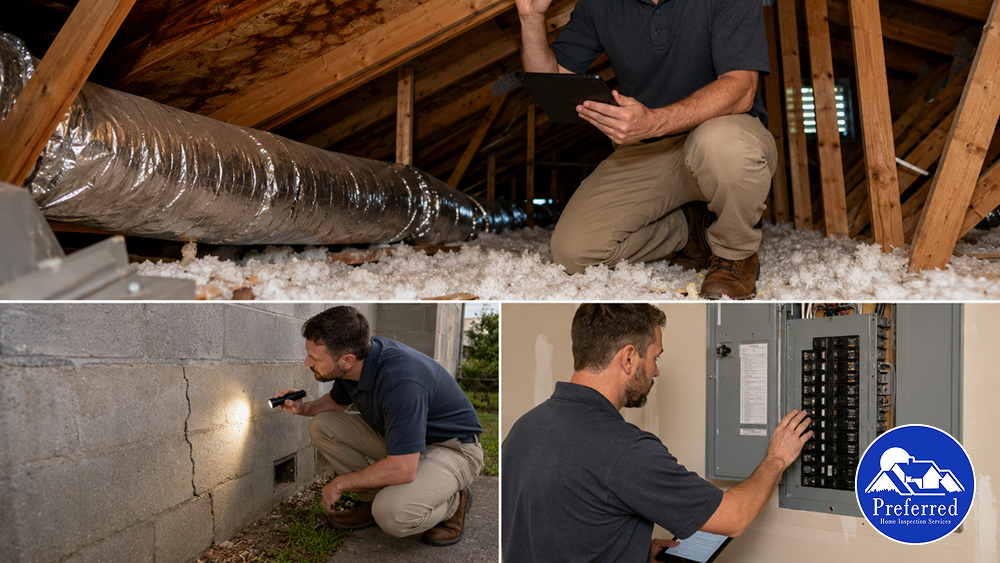
Home inspector checking attic moisture, foundation cracks, and an electrical panel.

5. Plumbing Deficiencies and Delaware Piping Risks

Minor plumbing drips often result in significant repair credits when hidden leaks mask costly structural rot. Inspectors routinely flag active pipe leaks, corroded copper, improper DIY fittings, stuck shutoff valves, and aging water heaters missing safety discharge pipes.

In Delaware developments built throughout the 1980s and 1990s, inspectors check specifically for polybutylene plumbing. Known for sudden micro-cracking and high failure rates, this grey plastic supply line should always be flagged to verify if present, as insurers often restrict coverage.

Next Steps for Buyers and Sellers:

  • Buyers: Have a plumber evaluate supply pipe materials and active leaks. Consider a sewer line scope as a common add-on if mature trees or older drain lines pose risks.
  • Sellers: Fix visible under-sink leaks and make sure the main water shutoff valve is clear and accessible before the inspector arrives.

6. Electrical Safety Findings and Panel Risks

Electrical issues frequently trigger buyer anxiety, yet most findings are straightforward fixes. Common defects include missing GFCI protection in wet areas, ungrounded outlets, open wire splices from DIY work, and double-tapped breakers inside the main panel.

Why it matters: Beyond shock and fire hazards, unaddressed electrical defects often create immediate friction with mortgage lenders and insurance providers before closing.

Next Steps and Seller Wins:

  • Distinguish simple fixes from major scopes: Replacing outlets or adding GFCI protection is routine and low-cost. Widespread defects, scorch marks, or outdated equipment require a licensed electrician evaluation to determine if a full panel replacement or service upgrade is needed.
  • Seller quick-wins: Replace missing cover plates, clearly label circuit breakers, and correct obvious DIY hazards before the inspector arrives.

7. HVAC Performance Issues and Critical Safety Indicators

An aging furnace or air conditioner often concerns home buyers, but end-of-life systems are standard operational findings across Delaware properties. The key is separating routine performance issues from true safety hazards that buyers must not ignore.

Common non-safety findings include:

  • Older units nearing the end of their operational lifespan
  • Deferred maintenance and inadequate airflow
  • Clogged condensate drainage lines and surface rust or corrosion

Safety risks demand immediate priority. Indications of carbon monoxide leaks or a suspected cracked heat exchanger require evaluation by a licensed HVAC contractor before closing.

Next Steps:

  • Buyers: Request past service history, schedule a specialist check for questionable systems, and negotiate closing credits using realistic replacement timelines.
  • Sellers: Change air filters, clear condensate drain lines, and leave recent service receipts out for the inspector.

Review how heating and cooling defects are photo-documented inside your report.

8. Mold Growth and Environmental Findings

Spotting mold on an inspection report causes unnecessary concern. Mold is primarily a moisture issue, not an automatic deal-breaker.

Inspectors frequently flag visible growth in crawlspaces or attics, musty odors, and staining on framing or insulation. Because mold requires water, fixing foundation drainage or roof ventilation stops growth at the source.

When to Hire a Specialist

Bring in a certified mold specialist or industrial hygienist if growth covers extensive areas, recurs after cleaning, or causes health concerns. Proper remediation follows three steps:

  • Eliminate the underlying moisture source
  • Remove contaminated materials
  • Verify air quality post-remediation

Seller Guidance

Never paint over mold. Fix the moisture problem directly, complete proper remediation, and provide documentation to buyers to prove the issue was handled correctly.

9. Termites and Wood-Destroying Insect Findings

Nothing stalls a Delaware real estate closing faster than an unexpected pest issue on a required WDI report. Common findings include active subterranean termites, carpenter ants, damaged or sistered floor joists, and damp timber.

Subterranean termites thrive in high-moisture environments, directly linking pest activity to the foundation and water issues covered in Section 1. WDI findings routinely trigger strict mortgage lender mandates, forcing immediate negotiations between buyers and sellers regarding treatment costs and structural repairs before closing.

Next Steps:

  • Schedule a dedicated termite inspection in Delaware when mud tubes or wood damage appear.
  • Eliminate moisture: Repair crawlspace dampness and plumbing leaks to make structural framing inhospitable to pests.
  • Seller prep: Eliminate direct wood-to-soil contact and move firewood or heavy mulch piles away from exterior foundation walls prior to inspection.

10. Radon Testing Findings and Mitigation Standards

Radon is invisible and odorless, yet ranks as the second leading cause of lung cancer in the United States. EPA mapping designates New Castle County as Zone 2 for moderate radon potential, while Kent and Sussex counties show lower predicted risk. Geographic maps cannot predict indoor gas levels, making testing necessary for every home.

During the inspection contingency, inspectors perform short-term testing to measure airborne concentrations against the EPA action threshold of 4.0 pCi/L. If results meet or exceed this guideline, a sub-slab depressurization system safely vents gas from beneath the foundation to above the roofline. A follow-up retest confirms the system lowered indoor levels.

During negotiations, sellers typically install the system prior to closing or provide a credit covering contractor installation. Whether scheduling a home inspection in Newark, DE or buying elsewhere in the state, schedule radon testing to protect your health and investment.

11. Septic System and Private Well Inspection Requirements

Rural properties in Kent and Sussex Counties frequently use on-site wastewater treatment and private wells. These systems introduce Delaware-specific regulatory mandates that generic inspection checklists miss.

The Delaware Department of Natural Resources and Environmental Control (DNREC) requires a certified Class H inspection prior to most property transfers. Properties with Innovative/Alternative (I/A) systems require inspectors with specialized certification. While a standard home inspector evaluates interior plumbing flow and fixtures, a licensed Class H inspector examines underground tanks, checks drain field health, and reviews maintenance and pumping records for evidence of failure.

For private wells, arrange dedicated water testing for coliform bacteria, nitrates, lead, and local contaminants.

Next Steps:

  • Order early: Schedule Class H inspections immediately upon entering contract to prevent closing delays.
  • Test well water: Include comprehensive water testing during your contingency period.
  • Understand scope: A standard home inspection covers visual systems, while septic evaluations require separate specialist timelines.

12. Suspected Asbestos and Legacy Environmental Hazards

Finding “suspected asbestos” on an inspection report causes immediate concern, but visual observation alone cannot confirm its presence.

Inspectors flag suspect materials in common legacy areas, including pipe insulation, textured acoustic ceilings, and vinyl floor tiles, particularly when materials show damage or improper disturbance. Because visual identification is not lab confirmation, buyers should never attempt DIY sampling or disturb suspect materials.

Next Steps and Negotiations:

  • Hire a specialist: Call a certified testing or abatement firm before starting renovations or if materials are friable (easily crumbled) and deteriorating.
  • Leverage your report: Request seller repair credits or professional remediation based on the material’s condition, location, and potential exposure risk.

Older Delaware housing stock may also present lead-based paint or legacy underground storage tanks, both requiring separate specialist evaluations. Review how “suspected material” language is documented inside your report to navigate negotiations with confidence.

How to Turn Your Delaware Inspection Report into an Action Plan

Long inspection reports easily overwhelm buyers. Your main goal is to separate safety hazards and active damage from routine maintenance. Follow this step-by-step workflow to process common home inspection findings in Delaware and navigate your contingency period with confidence.

1. Triage Summary Findings and Photos

Start with the summary page and photo logs inside your report. Review high-priority items first to gain visual context before reading the detailed system evaluations.

2. Categorize the Defects

Group all findings into five distinct categories: Safety, Water, Structural, Environmental, and Systems. Sorting issues this way keeps minor maintenance items from clouding major ones.

3. Order Specialty Inspections Immediately

Schedule time-sensitive add-on inspections right away if relevant to the property. This includes radon testing, termite (WDI) evaluations, well water testing, or Class H septic inspections.

4. Obtain Fast Contractor Estimates

For any defect likely costing over $1,000, secure two to three written quotes from licensed Delaware contractors. Fast estimates establish accurate market pricing for negotiations.

5. Build a Targeted Repair Request

Draft your request focusing strictly on major defects, safety risks, and active leaks. Exclude minor cosmetic updates to keep your negotiation strong and reasonable.

6. Strategic Repair Requests vs. Closing Credits

Request financial closing credits for major structural or HVAC work so you retain control over contractor selection and repair quality. Request direct seller repairs for simple fixes, such as replacing a faulty breaker or installing GFCI outlets.

7. Confirm Deadlines, Authorize Testing, and Verify Work

  • Track contract deadlines: Standard Delaware real estate contracts specify strict windows for report delivery and seller responses. Always confirm these target dates with your agent or attorney.
  • Handle invasive testing correctly: Inspections must not damage property without seller consent. Get written authorization before conducting invasive moisture tests, such as EIFS synthetic stucco evaluations.
  • Document agreements and re-inspect: Put all final repair agreements in writing. Schedule a formal re-inspection before settlement to confirm repairs met agreed standards.

Explore our residential home inspections, see what happens on-site during your inspection, or contact us to schedule your Delaware home inspection today.

Schedule Your Delaware Home Inspection

Frequently Asked Questions

What are the most common home inspection problems in Delaware?

Across the state, the five most frequent common home inspection findings in Delaware include:

  • Lower-level moisture intrusion: Damp crawlspaces, unsealed vapor barriers, and failing sump pumps.
  • Roof and attic defects: Damaged shingles, flashing leaks, and improper exhaust ventilation.
  • Electrical hazards: Missing GFCI outlets, open splices, and outdated service panels.
  • Plumbing deficiencies: Active leaks, corroded supply lines, and polybutylene piping.
  • HVAC system issues: Deferred maintenance, clogged lines, and aging heating units.

Across recent Delaware inspections, crawlspace moisture issues are frequently flagged, with structural concerns noted less often but still regularly.

What are the biggest home inspection red flags that can kill a deal?

The most critical red flags uncovered during property inspections include:

  • Active foundation and structural movement
  • Severe, ongoing water intrusion and mold growth
  • Major electrical safety risks and hazardous wiring
  • Complete roof system failure
  • Failed Class H septic inspections

Not every major finding is an automatic deal-breaker. Most issues can be resolved once buyers and sellers clarify repair scope, contractor costs, and structural risks during contract negotiations.

Do home inspections pass or fail in Delaware?

No. Home inspections in Delaware do not give a property a pass or fail grade.

  • The primary goal of an inspection is to document current physical conditions, safety hazards, and system risks.
  • Although the inspector does not issue a pass or fail score, mortgage lenders or insurance companies may still require specific repairs before approving financing or coverage.

Do I need a radon test in Delaware if my county is low risk?

Yes. You should always test the specific home you plan to buy.

  • Geographic risk zones indicate regional averages, not house-specific gas levels. High radon readings occur in homes across all Delaware counties regardless of local zone designations.
  • If radon tests exceed the 4.0 pCi/L threshold, standard real estate negotiations typically result in seller-installed mitigation systems or financial credits at closing.

How much does a home inspection cost in Delaware?

Standard property evaluations in Delaware start at $425, depending on property size and age.

  • Comprehensive residential home inspections cover the foundation, roof, plumbing, electrical, HVAC systems, and built-in appliances.
  • To request pricing for your property, contact us to get started.

Newark-area buyers: schedule a home inspection in Newark, DE for local service coverage.

Get Your Free Home Inspection Estimate

Call Us: (302) 475-4437