You are about to list your home, and the biggest financial risk is not your offer price. It is the unexpected repair surprise during the buyer’s inspection week, when hidden defects can derail negotiations, trigger price renegotiations, or kill the deal entirely.
A pre-listing home inspection gives sellers full clarity about a property’s true condition before buyers ever set foot inside. Having inspected more than 10,000 homes across Delaware since 1994, our team at Preferred Home Inspections has seen how this single step protects seller equity and keeps transactions on track.
This guide covers everything you need to know before listing your property:
- Whether getting an inspection before selling aligns with your goals
- Realistic pre-listing inspection costs in Delaware
- Ideal timing before your market debut
- How report findings affect required seller disclosures and price negotiations
Evaluating these factors early protects your equity and keeps your sale moving on your schedule. Here is how to decide if a seller inspection is right for your home.
Is a Pre-Listing Home Inspection Right for Your Delaware Home?
Are you trying to prevent repair surprises, or are you trying to maximize speed? That question usually determines whether a pre-sale evaluation is worth your time and budget. While a pre-listing inspection is not the right move for every seller, it delivers clear advantages in the right situations.
A pre-listing home inspection in Delaware makes the most sense if:
- Property age: Your home is older or has an undocumented maintenance history.
- System concerns: You suspect an aging roof, HVAC, electrical, or past moisture issues.
- Pricing certainty: You want to price accurately and eliminate aggressive post-offer price renegotiations.
- Specialized testing: You expect buyers to request radon testing, wood-destroying insect (WDI) reports, or sewer scopes.
A pre-listing inspection offers lower value if:
- You are selling the home strictly in as-is condition to cash investors.
- You are listing in an extreme seller’s market where local buyers routinely waive inspection contingencies.
If you are unsure which strategy fits your timeline and risk tolerance, discuss your options with your listing agent or explore our agent resources to coordinate the best approach for your property.

What a Pre-Listing Home Inspection Covers (and What It Does Not)
Ordering a pre-listing home inspection does not give your property a municipal pass stamp, nor does it guarantee buyers will skip their own evaluation. A pre-listing home inspection is simply a seller-commissioned condition report, and understanding its scope prevents unrealistic expectations.
It delivers a visual evaluation of your home’s major systems, including:
- Structural foundation, attic, and crawlspaces
- Roof cover, exterior cladding, and drainage
- Plumbing supply and drains, electrical panels, and HVAC systems
- Visible insulation, ventilation, and moisture red flags
To review a complete breakdown of evaluated components, explore our residential home inspection service details.
It is equally important to understand what this assessment is not. It is not an official appraisal, municipal code compliance inspection, permit review, or contractor repair estimate. Each of those evaluations requires a separate licensed professional.
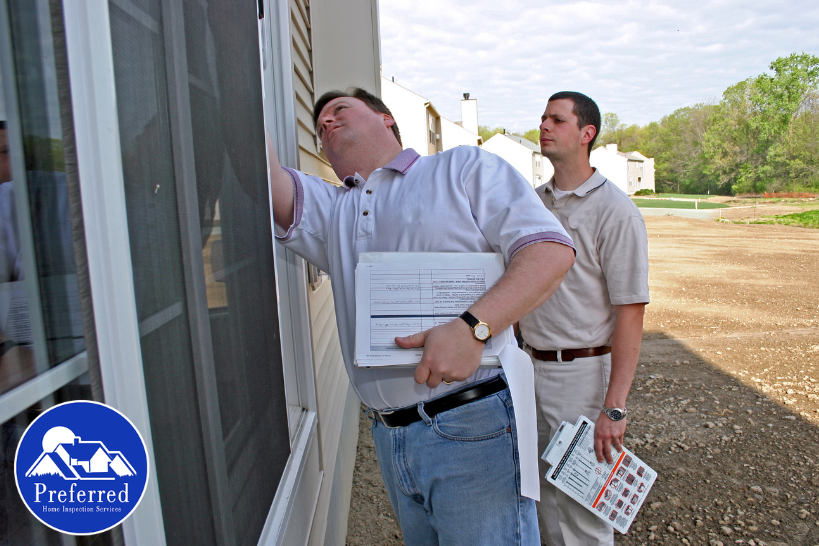
Buyers may still hire their own inspector during their contingency window. However, the photo documentation and prioritized findings in your inspection report give you a ready-made response to any repair request that comes in, backed by professional data rather than guesswork.
The Honest Trade-Offs of a Pre-Listing Home Inspection
Roughly 80% of real estate transactions involve repair negotiations triggered by buyer inspections, according to home inspection statistics. Commissioning a pre-listing inspection shifts that negotiating power firmly to the seller’s side, but the decision carries real trade-offs worth knowing upfront.
The Benefits
- Repair control: Hire contractors on your timeline, avoiding panic during tight contingency windows.
- Fewer surprises: Identifying major defects early keeps deals from falling apart mid-escrow.
- Accurate pricing: Clear condition reports prevent overpricing and sudden price reductions.
- Buyer confidence: Clean documentation demonstrates transparency and proactive care.
The Downsides
- Upfront cost: Inspection fees are paid out-of-pocket before securing a buyer.
- Disclosure obligations: Uncovering defects creates documented knowledge you must legally disclose under Delaware seller disclosure laws.
- Duplicate evaluations: Buyers frequently still hire their own independent inspector.
Common Misconceptions
- “It guarantees a faster sale.” Pricing and market demand drive speed. An inspection simply removes technical friction.
- “If I fix an issue, I don’t disclose it.” Documenting the original defect along with repair receipts offers superior legal protection.
- “Inspectors pass or fail homes.” Inspections generate condition reports, not pass/fail grades.
If these advantages align with your selling strategy, your next consideration is cost, particularly when adding common Delaware add-ons like radon and termite testing.
Delaware Pre-Listing Home Inspection Costs and Package Guide
In Delaware, standard pre-listing home inspection fees range between $350 and $550. Preferred Home Inspections starts at $425, with final pricing based on square footage, property age, and any add-on services you select.
Delaware Pre-Listing Inspection Cost Breakdown
- Standard Residential Home Inspection: Delaware range $350-$550, Preferred starting rate $425.
- Radon Testing Add-On: Delaware range $120-$175, Preferred starting rate $130.
- Termite / WDI Add-On: Delaware range $90-$150, Preferred starting rate $95.
- Sewer Scope Add-On: Delaware range $200-$350, Preferred rate varies by line length.
- Typical Bundled Total: Delaware range $560-$1,075, Preferred average $650-$850.
Selecting the Right Package for Your Listing
Match your inspection scope to your property’s age, construction type, and location:
- Baseline Package (Inspection Only): Ideal for newer townhomes and condos under 10 years old with concrete slab foundations. Covers core structural, electrical, plumbing, and HVAC systems.
- Common Delaware Bundle (Inspection + Radon): Recommended for single-family homes in New Castle and Kent counties, where elevated indoor radon is frequent. Testing before listing lets you address mitigation proactively.
- Older Home Bundle (Inspection + Radon + Sewer Scope): For mid-century or historic homes in mature neighborhoods with large trees. A sewer scope prevents five-figure pipe replacement surprises from emerging during a buyer’s contingency.
For a breakdown of regional cost drivers across Wilmington, Newark, and Middletown, read our complete guide on how much a home inspection costs in Delaware.
Delaware Seller Disclosures: How a Pre-Listing Home Inspection Changes What You Know
Many homeowners fear that getting a pre-listing home inspection increases their legal liability by uncovering hidden defects. In reality, relying on “ignorance is bliss” leaves sellers vulnerable, while documented transparency is far more defensible in post-closing disputes.
In Delaware real estate transactions, sellers generally must complete a state-required seller disclosure form and provide it to buyers within the contract timeline. Because seller obligations carry legal weight, your pre-listing inspection report becomes a tool for clarity, not liability.
A pre-listing home inspection directly impacts how you complete this form through three practical steps:
- Fulfill Baseline Disclosure Duties: Complete the state-required disclosure statement honestly and deliver it on the required timeline. Always consult your agent or attorney on legal specifics.
- Convert Suspicion to Actual Knowledge: A pre-listing inspection turns vague property concerns into documented facts. If an inspector identifies a cracked heat exchanger or main drain blockage in writing, you have documented knowledge that must be disclosed on the required state form.
- Document Repairs Transparently: Uncovering a defect does not ruin your listing. Fix an issue before going to market and disclose both the original finding and proof of the repair. Buyers respond far better to “fixed and documented” than to surprise discoveries.
Reducing Post-Closing Legal Risk
Post-settlement real estate disputes rarely stem from defects that were disclosed upfront. They happen when buyers suspect a seller intentionally concealed a problem. Full written disclosure backed by a pre-listing report and repair receipts is the most effective risk reduction strategy available to sellers.
Your Pre-List Documentation Folder
Keep a dedicated folder containing:
- The full pre-listing inspection report PDF
- Itemized repair invoices from licensed contractors
- Municipal building permits and final sign-offs
- Transferable contractor or manufacturer warranties
- Before-and-after repair photos
Once you understand disclosure, the next lever is timing, so you can fix critical items before going to market.
Pre-Listing Home Inspection Timeline: When to Schedule Before Selling
Scheduling your listing photos for Thursday only to discover an active roof leak on Tuesday is a real scenario. That roof issue then takes three weeks to get on a local contractor’s calendar, blowing your launch window entirely. Last-minute inspection surprises frequently force sellers to rush decisions under pressure, accept lower offers, or delay the listing.
Contractor availability in Delaware, seasonal HVAC service backlogs, and municipal permit lead times all affect how fast you can move from inspection to launch day. Booking a pre-listing home inspection 4 to 6 weeks before your target list date gives you room to repair, document, and launch with confidence.
Your 4-Week Pre-Listing Schedule:
- Week 1: Complete the pre-listing home inspection alongside optional radon and WDI (termite) testing.
- Week 2: Review findings, request contractor quotes, and decide which items to repair versus disclose.
- Week 3: Finish primary repairs, resolve common home inspection findings in Delaware, and collect repair documentation.
- Week 4: Finalize official seller disclosure forms, finish home staging, and capture professional listing photos.
If your listing date is already on the calendar, contact our team to book early and protect your launch timeline.
Hiring an Inspector and Preparing for Your Pre-Listing Home Inspection
Getting maximum value from your pre-listing home inspection comes down to hiring a qualified local professional and preparing your property for an unobstructed evaluation. Both steps are within your control.
Vetting Your Inspector
- Credentials and Licensing: Require Delaware state licensing, ASHI certification, and proven experience with regional property types.
- Report Quality and Support: Look for modern digital sample reports with photos, prioritized findings, quick turnaround, and post-inspection Q&A.
- Transparent Pricing: Choose clear, published rates that explicitly separate standard inspections from add-ons like radon and termite (WDI) testing.
Seller Preparation Checklist
Unobstructed access prevents restricted findings on your inspection report. Before your inspector arrives:
- Clear Access: Open pathways to the attic hatch, crawlspace, electrical panel, water heater, HVAC units, and garage.
- Remove Barriers: Replace dead batteries in smoke and carbon monoxide detectors, unlock utility closets, and open exterior gates.
- Gather Records: Provide receipts for recent repairs, age documentation for the roof and HVAC, and disclosures on known issues.
Turning Pre-Listing Home Inspection Findings into a Selling Strategy
Fixing every item on a pre-listing home inspection report often reduces net profit while creating unnecessary closing delays. Most sellers assume a pre-list report demands a total home overhaul. It does not. Strategic triage based on deal risk, repair costs, and timeline pressure is what actually protects your bottom line.
The 3-Bucket Triage Framework
- Safety Hazards: Address immediately. Structural defects, dangerous wiring, or active leaks routinely stall buyer financing and can kill deals.
- Major Systems (Roof, HVAC, Plumbing): Get quotes early to choose between repairs or credits. Review common home inspection findings in Delaware to benchmark costs against typical repair ranges.
- Cosmetic and Maintenance Items: Disclose known material issues accurately on seller disclosures without over-repairing minor cosmetic flaws.
Financial Decision Model
- Execute Repairs: Best when defects kill deals and contractor costs are predictable.
- Reduce Price: Ideal when contractor schedules are tight or repair costs vary significantly.
- Offer Credits: Preserves seller timeline while giving buyers flexibility to handle repairs their way.
How to Share Your Report
- Keep Internal: Fix issues and update required state seller disclosures. No buyer sees the report.
- Share Summary and Invoices: Proves licensed work was completed without overwhelming buyers with minor maintenance notes.
- Share Full Report: Best when findings are clean or major repairs are already completed.
Pre-listing inspections remove emotion from negotiations because both sides operate from the exact same facts.
Review our agent resources for coordination tools. For a clear, seller-focused report, contact us today.
Choosing the Right Pre-Listing Strategy for Your Delaware Home
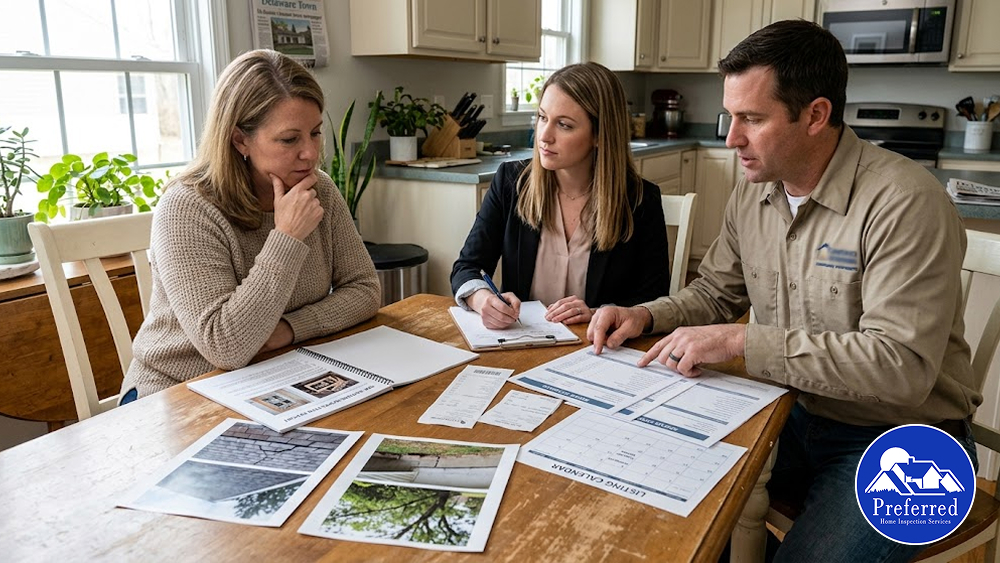
Planning your home sale comes down to balancing speed, certainty, and budget. Use this decision framework to align your approach with your specific goals:
- Speed-first seller: Skip the pre-list inspection, price the property competitively, and prepare to negotiate repairs or credits during the buyer’s contingency window.
- Certainty-first seller: Book a pre-list inspection, handle targeted repairs on critical systems, and present a well-documented home to prevent deal delays.
- Transparency-first seller: Complete a pre-list inspection, disclose findings upfront, and let buyers make informed offers without post-inspection surprises.
To evaluate your choices, learn what is included in a full home evaluation or review our guide to understand pricing detail for Delaware.
Ready to Schedule Your Inspection?
When you contact our team to book your inspection, have the following details ready:
- Property address, approximate square footage, and age
- Your target listing date
- Any needed add-on services (such as radon testing or termite inspection)
We offer same-week scheduling whenever availability allows, giving you the clear documentation needed to list your Delaware property with confidence.
Frequently Asked Questions
Do buyers still do an inspection if I provide a pre-listing report?
Yes, many buyers still hire their own inspector for independent due diligence. Providing a pre-listing report dramatically reduces repair surprises and prevents lowball post-offer price renegotiations. Sellers who share their report early tend to attract more serious buyers and fewer last-minute demands.
Will a pre-listing inspection hurt my sale because I have to disclose defects?
Uncovering defects only hurts your sale if you leave major issues unaddressed or attempt to conceal them. Pair your seller disclosure with itemized contractor receipts for completed repairs to turn potential liabilities into demonstrations of responsible ownership.
What is the typical pre-listing inspection cost in Delaware for a single-family home?
A standard pre-listing inspection in Delaware typically ranges between $350 and $550 for a single-family home. Preferred Home Inspections starts at $425. Final pricing depends on property square footage, age, and structural complexities such as crawlspaces, multiple HVAC systems, or detached structures.
Which inspection add-ons are most worth it for Delaware sellers?
Radon testing is a priority in New Castle and Kent counties due to regional soil conditions. Termite (WDI) inspections are frequently required by buyer mortgage lenders, while sewer scopes are valuable for older properties with large trees near the sewer line. Bundling these add-ons before listing prevents deal-killing surprises later.
How long does a pre-sale home inspection take, and when do I get the report?
An on-site pre-sale inspection generally takes 2 to 3 hours depending on property size and condition. Your inspection report is available within 24 hours via a digital, photo-documented format you can share directly with your listing agent, attorney, or prospective buyers.
Ready to protect your equity before you list? Contact our team to schedule your pre-listing inspection in Delaware.